
How Much Does It Cost to Replace a Hot Water Cylinder in NZ?
Contents
Quick answer: Most New Zealand homeowners pay roughly $3,500–$5,500 to replace a standard electric hot water cylinder like-for-like, including supply and installation. A pressure conversion, a hard-to-reach location, or an upgrade to a heat pump cylinder ($7,500–$9,500 installed) pushes it higher. Below is what drives the price, and how to keep it sensible.
Typical replacement costs by cylinder type
The biggest single factor is the type of cylinder you’re replacing (or upgrading to). These are indicative installed prices for a straightforward job in 2026 — your quote depends on size, brand, and site:
| Cylinder type | Indicative installed cost | Best for |
|---|---|---|
| Electric — like-for-like swap | $3,500–$4,500 | Replacing an existing electric cylinder in the same spot |
| Low → mains pressure conversion | $4,000–$5,500 | Upgrading flow while replacing the cylinder |
| Gas continuous flow (califont) | $4,000–$6,000 | Homes moving to on-demand gas hot water |
| Heat pump hot water cylinder (all-in-one) | $7,500–$9,500 | Lowest running costs long term |
What’s included in a cylinder replacement
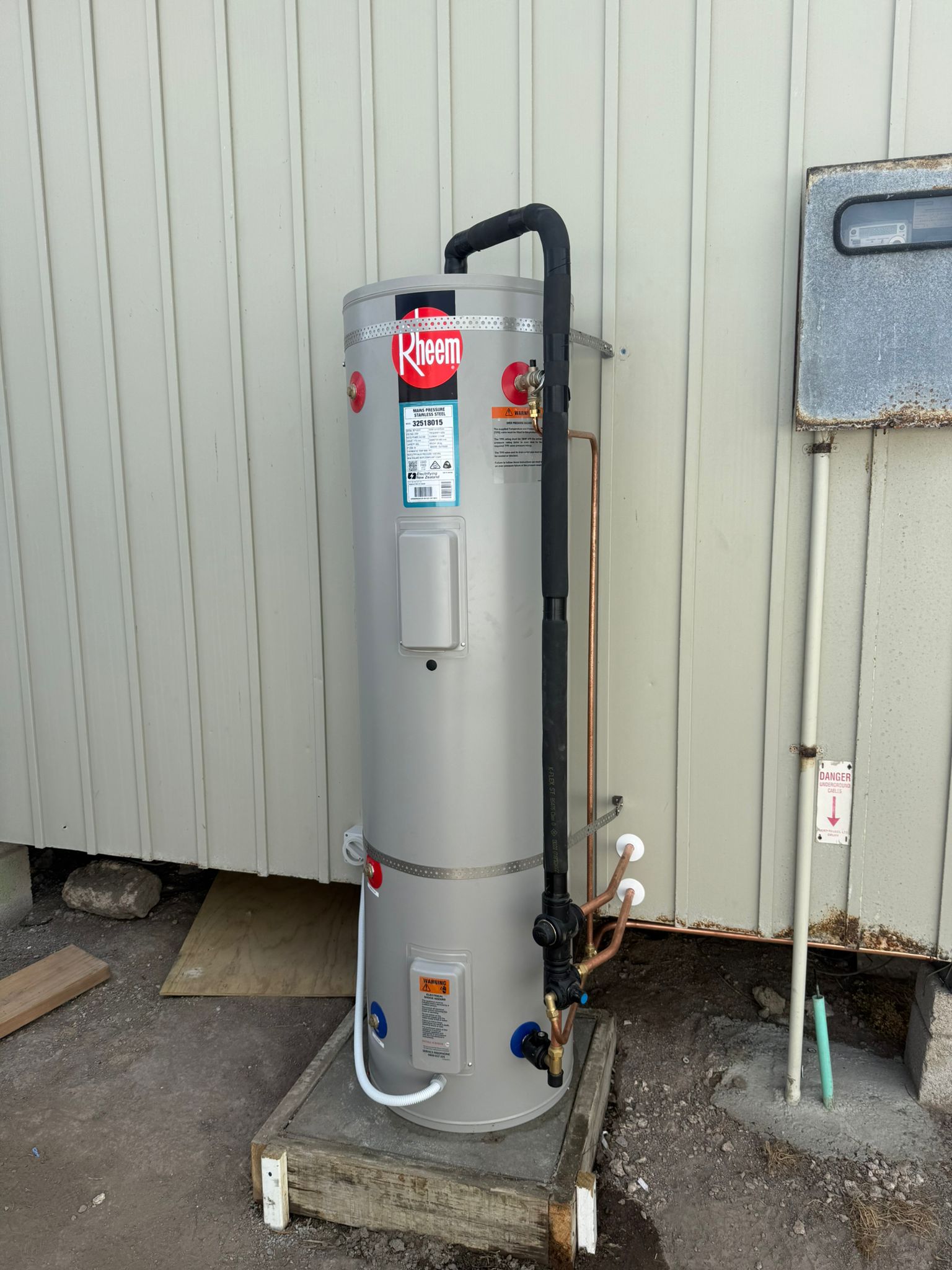
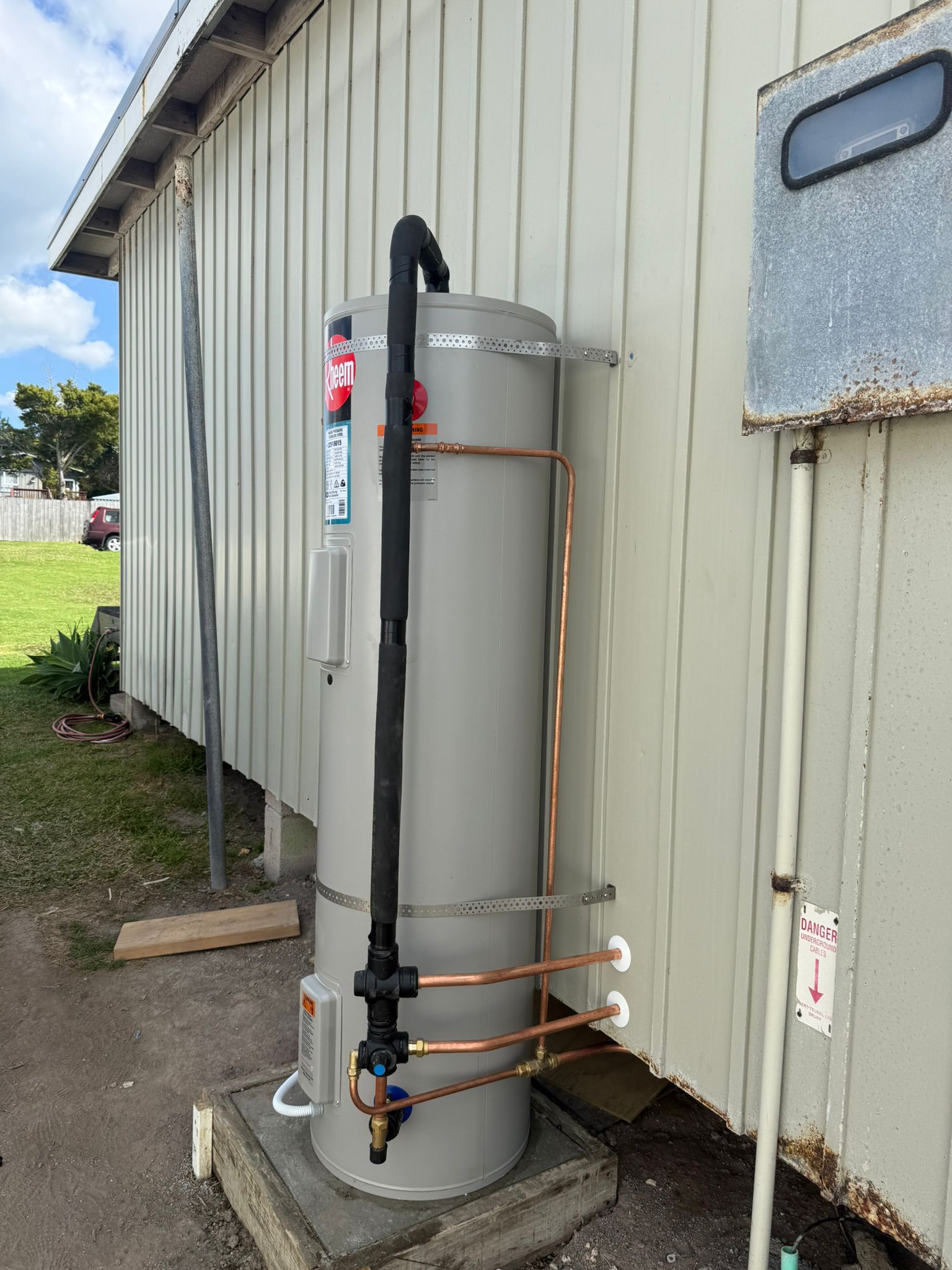
A fair fixed-price replacement should cover more than just the tank. Typically it includes:
- Supply of the new cylinder
- Removal and disposal of the old unit
- Slipped under drip tray (or plumbed in)
- Installation by a registered tradesperson (electrical work must be done by a registered electrician)
- New valves and fittings (relief valve, tempering valve where required)
- Seismic restraint, as required by the Building Code
- Compliance sign-off / certification
If a quote looks unusually cheap, check which of these it leaves out — Electrician attendance and full valve replacement are the usual gaps
What makes the price go up or down
- Size. A 135L cylinder costs less than a 300L. Bigger tanks cost more to supply and, sometimes, to manoeuvre in will require two people.
- Pressure conversion. Switching from an old low-pressure (header-tank) system to mains pressure hot water adds valves and pipework, so it costs more than a like-for-like swap. We also find most upgrades will require a new drain to be installed for the tanks overflow pipework.
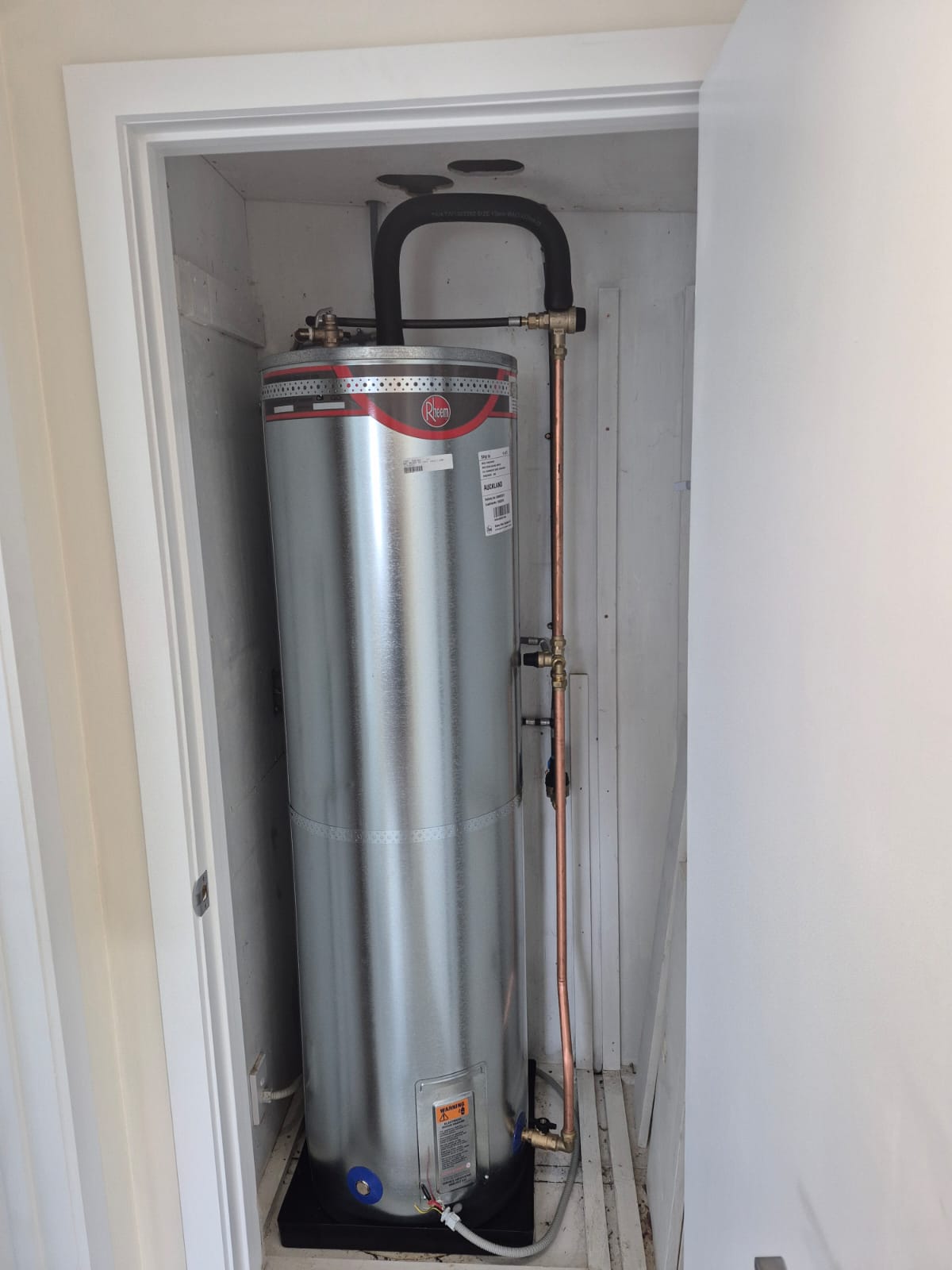
- Location and access. A cylinder in the roof space or a tight cupboard takes longer than one in the garage.
- Material and brand. Copper tanks are no longer keeping up with harsh water quality, a lot of people are moving away from copper and getting either vitreous enamel or stainless steel.
- Electric vs heat pump. The single biggest cost lever — covered next.
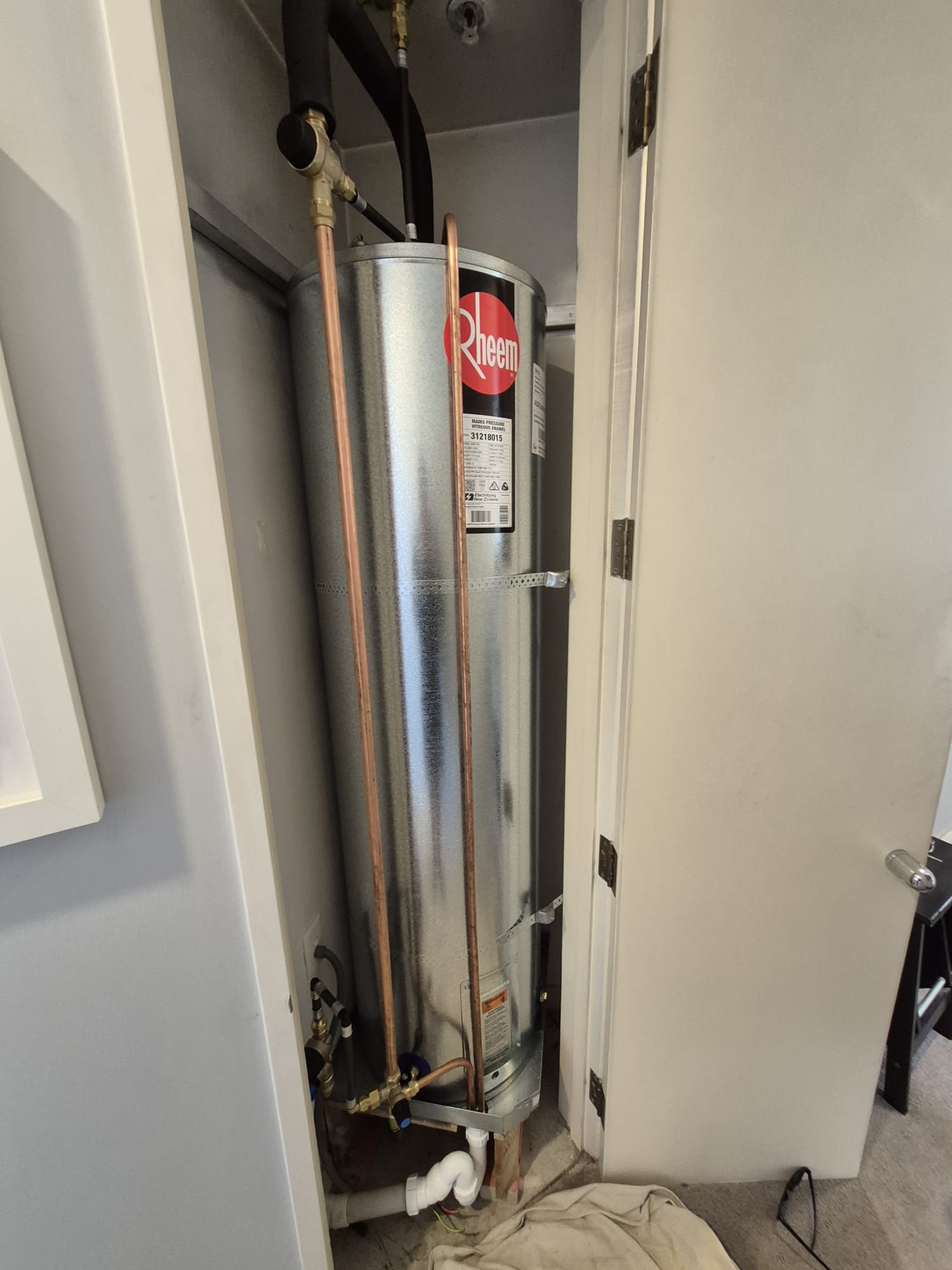
Electric vs heat pump: the cost trade-off
A standard electric hot water cylinder is the cheapest to buy and install. A hot water heat pump cylinder costs more upfront, but uses around 60–75% less electricity to heat the same water — because it moves heat from the air rather than generating it directly. Over a 10–15 year life, that running-cost gap can offset much of the higher purchase price, especially for larger households.
Rule of thumb: if you’re staying put long term and want the lowest bills, price up a heat pump. If you need hot water back today at the lowest outlay, like-for-like electric is usually the call.
How long should a cylinder last — and when is replacing worth it?
Most electric cylinders last around 10–15 years. Once a tank itself is leaking, it can’t be repaired and needs replacing. But if the fault is an element, thermostat, or valve, a repair is often far cheaper than a new cylinder — see our guide on hot water cylinder repairs to work out which side of the line you’re on.
Do you need building consent to replace a cylinder?
No, in most cases, you do not need a building consent to replace or reposition a hot water cylinder in New Zealand. Under Schedule 1 (Exemption 38) of the Building Act 2004, replacing or moving an existing water heater is exempt from building consent, provided specific conditions are met.