
Hot Water Cylinder Not Working? Common Repairs, Costs & When to Replace
Contents
Quick answer: Sudden loss of hot water is most often a tripped breaker, a failed element, or a faulty thermostat — all repairable. A leaking tank, on the other hand, means the cylinder itself has failed and needs replacing. This guide helps you tell the difference before you call anyone.
First checks before you call a professional
A few safe checks can save you a call-out:
- Check the switchboard. A tripped breaker or blown fuse is the most common cause of sudden no hot water. Reset it once — if it trips again, stop and call a professional.
- Check if you’re on off-peak / ripple control. Many NZ homes have their cylinder switched off during peak demand by the lines company. If the water’s just cooler than usual at peak times, this may be normal.
- Look for leaks. Any water pooling under or around the cylinder is a red flag — go straight to the section below.
Safety note: don’t open the cylinder or touch wiring. Electrical work on a cylinder must be done by a registered electrician.
Common hot water cylinder problems and likely fixes
| Symptom | Likely cause | Repair or replace? |
|---|---|---|
| No hot water at all | Tripped breaker, failed element, or thermostat | Usually repairable |
| Runs out quickly / not hot enough | Faulty thermostat, one element out (dual-element), or undersized cylinder | Repairable (or resize) |
| Water too hot / scalding | Thermostat stuck, or missing/failed tempering valve | Repairable |
| Leaking from the tank | Corroded tank | Replace |
| Leaking from a valve | Faulty relief or tempering valve | Usually repairable |
| Discoloured or smelly water | Spent anode, or sediment build-up | Repairable (anode / flush) |
| Rumbling / popping noises | Sediment on the element | Repairable (element/valve/flush) |
Repair vs replace: how to decide
Three questions settle most cases:
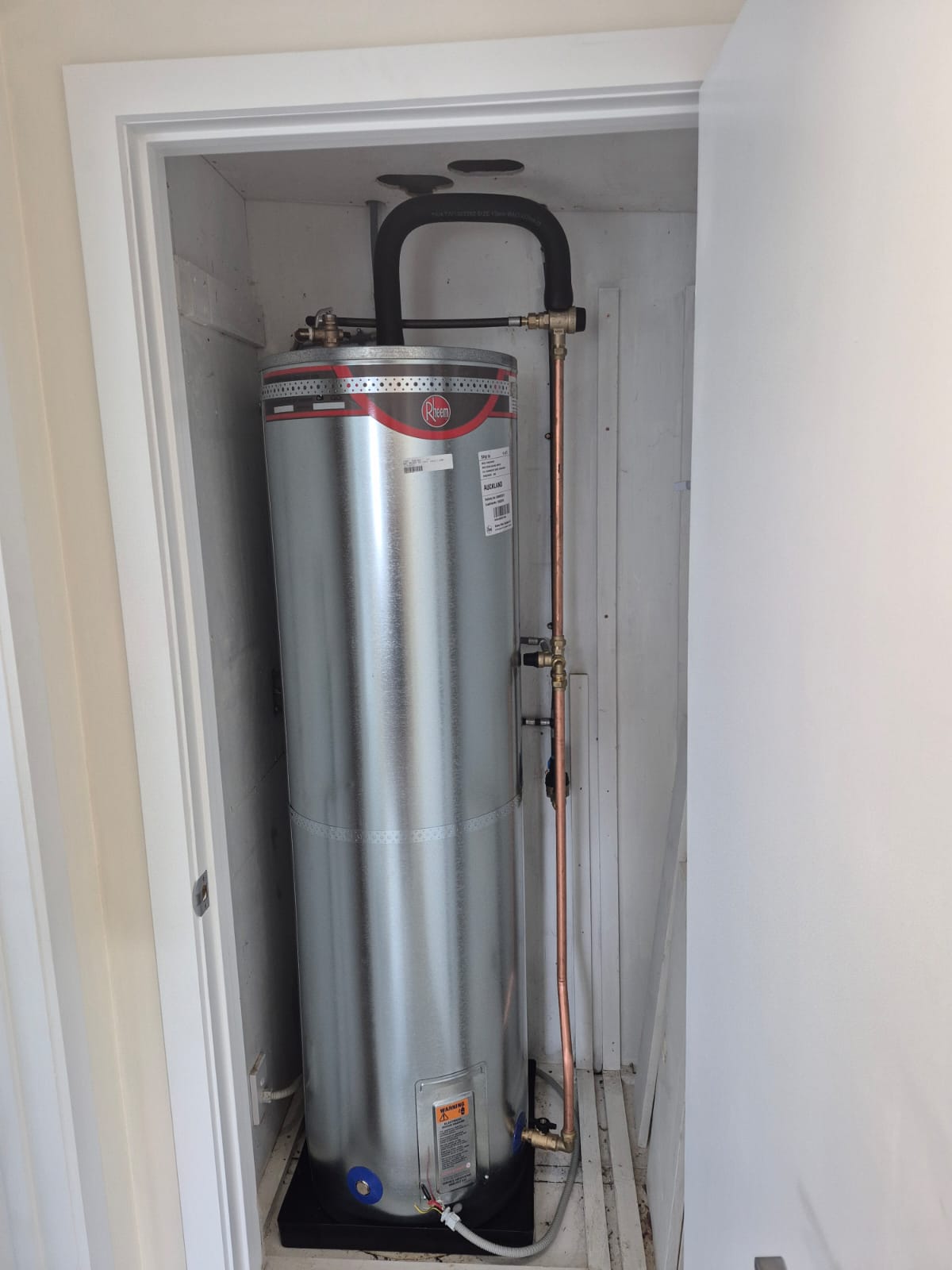
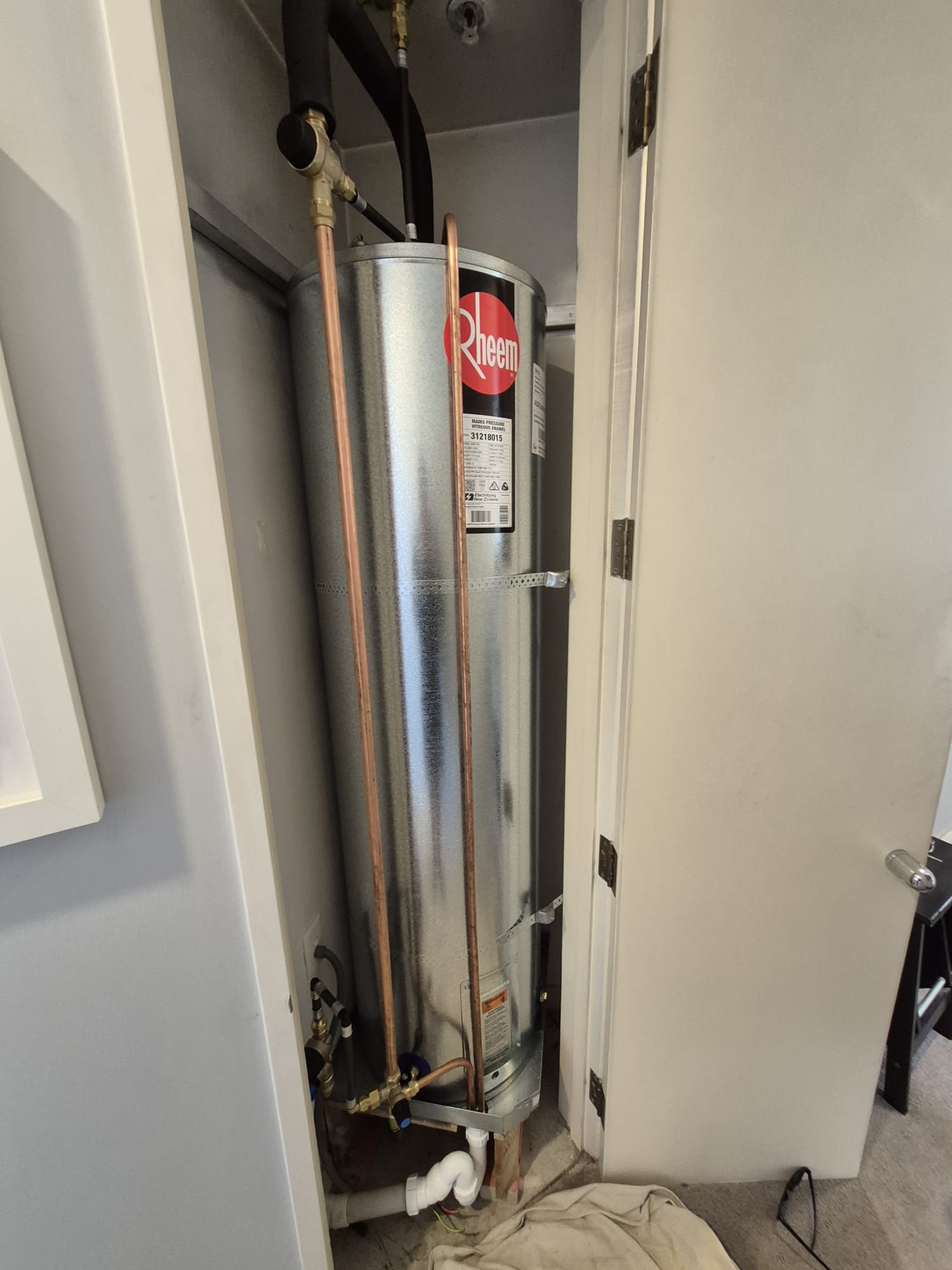
- Is the tank leaking? If yes, replace — a corroded tank can’t be repaired.
- How old is it? Most cylinders last 10–15 years. If yours is near the end and needs a significant repair, replacement is often better value.
- What’s the repair worth? An element or thermostat swap is a fraction of a new cylinder. A major repair on an old unit rarely is.
What do hot water cylinder repairs cost in NZ?
Common repairs are far cheaper than replacement. Indicative 2026 ranges, including parts and labour for a straightforward job:
| Repair | Indicative cost |
|---|---|
| Element replacement | $250–$450 |
| Thermostat replacement | $250–$400 |
| Relief or tempering valve | $200–$400 |
| Other leaking valve(s) | $200–$400 |
By comparison, a full replacement typically starts around $3,500 — so a repair is usually the sensible first option unless the tank itself has gone. See our hot water cylinder repairs service for a fixed price.
Who can legally do the work?
Hot water cylinder repairs aren’t a DIY job. Working on an electric cylinder — including replacing an element or thermostat — is prescribed electrical work that must be carried out by a registered electrician, and any gas work by a licensed gasfitter. Cylinders must also store water at 60°C and deliver it tempered — generally no hotter than 50°C at home taps (45°C in schools, hospitals and care facilities) — to control Legionella and prevent scalding, under Building Code clause G12.
When it’s time to replace
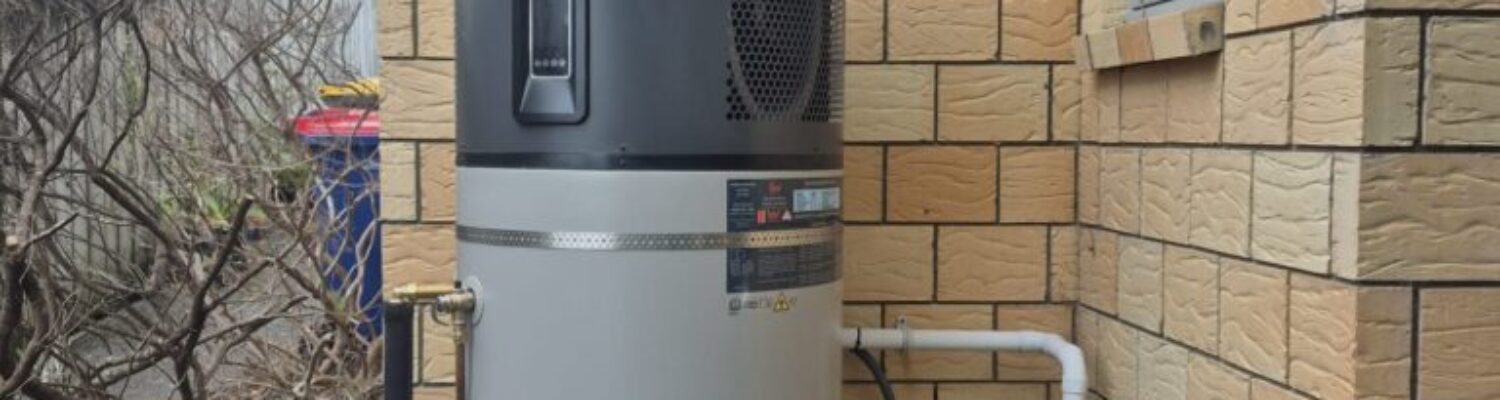
If the tank’s leaking or the cylinder’s simply old and tired, replacement is the better spend. Our guide on hot water cylinder replacement cost breaks down the numbers, and if you’re upgrading it’s worth comparing a standard electric hot water cylinder with a heat pump.