
How Long Does It Take to Heat a Hot Water Cylinder?
- A standard 180L electric hot water cylinder on a 2kW element takes roughly 4.5 hours to fully reheat from cold, while a 300L cylinder on the same element takes closer to 8 hours.
- Upgrading from a 2kW to a 3kW heating element cuts reheat times by around a third — a common upgrade choice for larger households.
- Off-peak ripple control, used widely across New Zealand by lines companies (Vector in Auckland), can delay when your cylinder reheats — misunderstanding this is one of the most frequent causes of cold-water complaints.
Estimated full reheat time by cylinder size (2kW element, 15°C to 60°C)
What heating time actually means for a hot water cylinder
When people ask how long it takes to heat a hot water cylinder, they’re usually asking one of two different questions: how long from completely cold, or how long to recover after a heavy draw-off. Both matter, but they have different answers. A full cold-start reheat — the kind that happens after a power outage or a new installation — is the longest scenario. Recovery time after a shower or two is considerably shorter because the cylinder only needs to top up a portion of its stored volume.
For electric cylinders, heating time is almost entirely determined by three variables: the cylinder’s storage volume in litres, the wattage of the installed heating element, and the incoming cold water temperature. In Auckland, mains cold water typically sits between 14°C and 18°C depending on the season, which is relevant because it affects how many degrees of temperature rise the element has to deliver.
Key terminology a newcomer needs to know
Before working through the numbers, it helps to understand the terms that come up repeatedly in this space.
- Element wattage: The electrical output of the immersion heater inside the cylinder — typically 2kW or 3kW in New Zealand residential installations. Higher wattage means faster heating but higher peak electricity draw.
- kWh (kilowatt-hour): The unit of energy consumed. A 3kW element running for one hour uses 3 kWh of electricity.
- Thermostat setpoint: The target temperature your cylinder heats to, a legal minimum of 60°C in New Zealand (Building Code G12, for Legionella control), though most are factory-set to 65–70°C.
- Ripple control: A signal sent by the lines company (used by lines companies across New Zealand, e.g. Vector in Auckland) that can temporarily disable your cylinder’s element to manage grid load. Your cylinder may not be heating even when you expect it to be.
- Standing losses: Heat lost through the cylinder’s insulation while the water sits idle. Modern cylinders are well-insulated, but this still affects how often the element cycles on.
- Recovery rate: How quickly, in litres per hour, a cylinder can reheat drawn-off water back to the setpoint temperature.
Heating time estimates by cylinder size
The rough formula is: Energy required (kWh) = Volume (L) × Temperature rise (°C) × 0.00116. Dividing that by the element’s kW rating gives hours. Assuming a cold-start from 15°C to 60°C (a 45°C rise) and a 2kW element, typical estimates are:
- 135L cylinder: Approximately 3.5 to 4 hours from cold on a 2kW element. With a 3kW element, this drops to roughly 2 to 2.5 hours.
- 180L cylinder: Approximately 4.5 to 5 hours from cold on 2kW. With a 3kW element, this drops to roughly 3 to 3.5 hours.
- 250L cylinder: Approximately 6.5 to 7 hours on 2kW; 4 to 4.5 hours on 3kW.
- 300L cylinder: Approximately 7.5 to 8.5 hours on 2kW; 5 to 5.5 hours on 3kW.
These ranges account for real-world variation: heat losses through pipe work, minor thermostat tolerances, and starting temperatures slightly above or below 15°C. According to EECA Energywise, water heating accounts for around 30% of a typical New Zealand household’s energy use, which gives some context for why element sizing and cylinder volume decisions carry genuine long-term cost implications.
For households considering which size suits them, our overview of electric hot water cylinders covers the capacity options in more detail alongside installation considerations specific to New Zealand homes.
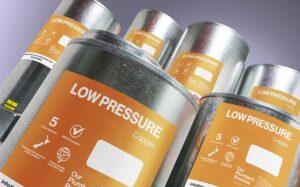
Options and tradeoffs when sizing and configuring
Choosing between a 180L and a 300L cylinder is not purely about how many people live in the house. It also determines how tolerant your system is to usage spikes and how much ripple-control interruption matters.
- A smaller cylinder with a larger element reheats quickly but offers less buffer if the element is interrupted.
- A larger cylinder with a smaller element takes longer to reheat but maintains a bigger reserve through peak demand periods.
- Households on a controlled tariff (where the local lines company applies ripple control for several hours per day) often benefit from a larger cylinder precisely because it can absorb the off-peak gap without running cold.
- A 250L cylinder is often the practical midpoint for a 3–4 person household — enough reserve, reasonable reheat time, and manageable standing losses.
Common mistakes people make
Misreading ripple control is the single most common source of confusion. Homeowners assume the cylinder is faulty when it simply hasn’t been given a heating window by the network. Checking whether the property is on a controlled tariff is the first diagnostic step before calling a plumber.
A second frequent error is setting the thermostat below 60°C to save energy. This is not just inadvisable — it is non-compliant with the New Zealand Building Code (G12/AS1), which requires stored water to reach at least 60°C daily to control Legionella, so a registered electrician or plumber should not set it lower. Running below 60°C raises Legionella risk for only marginal savings; the correct approach is to keep the cylinder at 60°C or above and reduce draw-off frequency if cost is a concern.
Third, people often underestimate the impact of pipe insulation, which matters most on outdoor cylinder installations and long exposed pipe runs. Uninsulated runs between the cylinder and the tap mean the first draw after an idle period is cold regardless of how well the cylinder has heated — often blamed on the cylinder when it is actually a pipe heat-loss issue.
Finally, confusing a partial draw-off recovery with a full cold-start leads to unrealistic expectations. If a family of five uses hot water heavily in the morning, a 180L cylinder on 2kW will not be fully reheated by mid-afternoon without ripple-control-free access to the grid. That is a sizing issue, not a fault.
Other considerations
Future-proofing matters here. Auckland’s electricity network is under increasing pressure from new demand — Vector has publicly warned that without smart, scheduled EV charging it would need to build the equivalent of the Auckland network several times over by 2050. As networks manage that load, how and when controlled cylinders receive their heating window may change, so a cylinder that seems adequately sized today on a short controlled period could feel undersized if those patterns shift. There is also the question of element replacement: older installations often run smaller single elements, but many cylinder manufacturers now offer dual-element configurations that provide faster reheat as a fallback. If your cylinder is approaching 15 years old, the replacement decision is also an opportunity to reassess whether the volume and element wattage still match your household’s actual demand.