
What Temperature Should Your Hot Water Cylinder Be? NZ Thermostat Guide
Jump To
TLDR: Your hot water cylinder should be set to at least 60°C. That’s hot enough to stop Legionella bacteria growing in the tank. A tempering valve then cools the water down before it reaches you, so basins, showers and baths in homes plumbed since November 2024 get 50°C or less. Turning the cylinder down to save on your power bill isn’t worth it. Here’s how it all works, where to find the thermostat, and what it looks like when one’s on the way out.
The temperatures that matter
When people talk about their hot water temperature, they usually mean one number. There are actually two: how hot the water sits in the cylinder, and how hot it is when it comes out of the tap. The Building Code sets limits for both.
| Where | Temperature | Why |
|---|---|---|
| Inside the cylinder | 60°C minimum | Stops Legionella and other bacteria breeding in lukewarm water |
| Basins, showers and baths at home | 50°C maximum (fixtures installed since 2 November 2024) | Cuts the risk of scalds. Older homes were usually set up for 55°C and don’t need to change |
| Schools, hospitals and care homes | 45°C maximum | A lower limit where the people using the taps are most at risk of being scalded |
| Early childhood centres (taps tamariki can reach) | 40°C maximum | Required for Ministry of Education licensing |
| Kitchen sinks and laundry tubs | No maximum | The tap limits only apply to fixtures you wash yourself at |
Source: Building Code clause G12, preventing scalding from tap water.
The bit that makes both work is the tempering valve. It sits on the hot pipe coming out of the cylinder and mixes in cold water. That lets the tank stay hot enough to keep bugs at bay, while the water coming out of your shower stays safe on your skin. Most cylinder thermostats go from 60°C up to 70–75°C. The Rheem mains pressure cylinders we sell, for example, are rated 60–70°C.
Should I turn my hot water cylinder down to save power?
You’ll see this tip around a lot. For an electric cylinder, we wouldn’t do it. Knocking the thermostat below 60°C saves very little, and it leaves the tank sitting at just the temperature Legionella likes. If you want a smaller power bill, these make a much bigger difference:
- Fix that dripping hot tap or relief valve. Every drip is hot water you’ve paid to heat, going straight down the drain.
- Lag the first couple of metres of hot pipe coming off the cylinder, and make sure an older cylinder is properly insulated. Our guide to cylinder insulation standards covers what to look for.
- Check your power plan. If your retailer offers ripple control or a night rate for hot water, it can cut the cost of heating it.
- Go heat pump when it’s time to replace. A heat pump cylinder heats the same water for a fraction of the power. Compare options on our hot water heat pump page.
And if the problem is water coming out too hot, the answer is usually the tempering valve, not the cylinder thermostat.
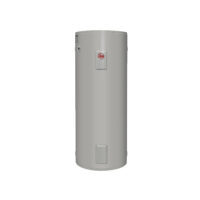
Rheem Optima In/Ext Vitreous Enamel Hot Water Cylinder 180L
$1,654.59 Incl GST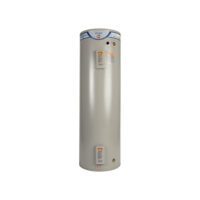
Rheem Optima In/Ext Vitreous Enamel Hot Water Cylinder 300L
$2,564.80 Incl GST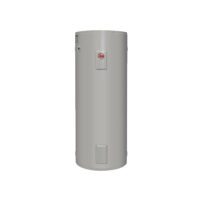
Rheem Optima In/Ext Vitreous Enamel Hot Water Cylinder 400L
$3,604.78 Incl GST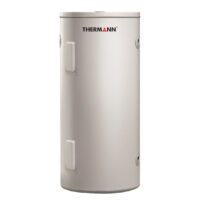
Thermann Large Electric Storage Hot Water System – 180L 490mm
$1,218.01 Incl GST
Where is the thermostat on a hot water cylinder?
| System | Where the thermostat is | Can I adjust it myself? |
|---|---|---|
| Electric cylinder (mains or low pressure) | Behind a screwed-on cover plate near the bottom of the cylinder, next to the element | No. There’s live 230V wiring behind that cover, and only a registered electrician should be working on it |
| Gas continuous flow | On a wall controller inside, usually in the kitchen or bathroom, or on the unit itself | Yes, within the limits your installer has set |
| Heat pump cylinder | On the unit’s control panel, and on some models a phone app | Yes. Some eco modes store water below 60°C, but the unit then runs a regular cycle that heats the tank above 60°C to kill bacteria. Leave that cycle switched on |
The Rinnai HydraHeat is a good example. It runs at 60°C by default, has eco modes at 50°C and 55°C, and heats the tank above 60°C for an hour once a week to deal with Legionella. Other brands do it differently, so check the manual for yours.
Gas continuous flow units like the Rinnai INFINITY range don’t store water at all. They heat it as you use it, and the controller lets you choose the temperature at the tap.
How to check your hot water temperature
- Pick a tap. To check what you’re getting in the shower, use the bathroom basin. To get closer to the temperature in the cylinder, use the kitchen or laundry tap nearest to it, as these often aren’t tempered.
- Run the hot water for a minute or two, until it stops getting any hotter.
- Fill a glass or jug and pop a cooking thermometer in it.
- In a home plumbed since November 2024, a bathroom tap should read 50°C or a touch under. Older homes are usually set up for around 55°C. Much hotter than that points to the tempering valve. Much cooler can mean a thermostat, element or tempering valve fault.
Thermostat problems: what the signs mean
| What you notice | Likely cause |
|---|---|
| Scalding hot water in the shower | Tempering valve failed or missing, or the thermostat is stuck on |
| Water that’s lukewarm and never gets properly hot | Thermostat set too low or failing, or a burnt-out element |
| No hot water at all | A tripped breaker on the switchboard, a failed element or thermostat, ripple relay, or the thermostat’s safety cut-out has tripped |
| Relief valve constantly letting out hot water or steam | The cylinder may be overheating because of a faulty thermostat. Switch it off at the switchboard and get a professional in |
| The hot water circuit keeps tripping | An element or thermostat fault, or water getting into the wiring, get a electrician to look into this for you. |
| Taking much longer to heat up than it used to | A scaled-up or failing element. See how long a cylinder should take to heat up |
For more help working out what’s wrong, read our guide to common hot water cylinder repairs and costs, or book us in through our hot water cylinder repairs service.
Replace the thermostat, or the whole cylinder?
If the cylinder itself is in good nick, replacing the faulty part is usually the way to go. A new thermostat typically costs around $250–$400 fitted, and an element $250–$450, compared with roughly $3,500 or more for a new cylinder installed. If yours is showing other warning signs that the tank is failing, it’s probably time to replace it.
If you’re replacing, these are good places to start for most Kiwi homes:
- Rheem Mains Pressure 177L → for 2–3 people
- Rinnai Enamel Mains Pressure 250L (indoor/outdoor) → for 3–4 people
- Thermann Electric 250L → for 3–4 people
Browse our full range of electric hot water cylinders, or read our maintenance guide to get more life out of the one you’ve got.
Water too hot, not hot enough, or not there at all? We repair, replace and install hot water cylinders right around New Zealand. Give us a call on 0800 234 800 or get an online quote.
FAQ
At least 60°C. That’s hot enough to stop Legionella growing in the tank. A tempering valve then brings the temperature down before the water reaches your bathroom taps.